

The Complete History of Iron Fencing
January 12, 2026
Not all metal fences perform the same across the United States. Climate, environment and material quality play huge roles in how long your fence lasts, how often it requires maintenance and how it looks over time. This guide explains the history of iron fencing, the most common metal fence materials used today, how to distinguish plain versus ornamental designs, what to expect during installation, finish options and the real‑world cost and longevity trade‑offs homeowners and business owners should understand.
Why Climate and Environment Matter for Metal Fencing
The United States spans a wide range of climates—from humid coastal regions to arid deserts and snowy mountain areas. Moisture, salt air, extreme temperatures and UV exposure all impact how metal fences age. Iron and steel can rust when protective coatings are damaged; aluminum resists corrosion but may bend more easily in high winds; and powder‑coated finishes last longer in harsh environments than traditional paints. These climate factors mean that material selection, coating quality, and proper installation are not just aesthetic decisions; they directly affect lifespan, maintenance schedules, and total cost.
Sources: Northland Fence, JayFencing, EliteFencing
Chronlogical History of Iron Fencing

Iron in ancient times (1500 BCE – 500 BCE). Iron became a useful metal when the Hittites began using it around 1500 BCE. When their empire fell, iron smelting knowledge spread across Europe and Asia, ushering in the Iron Age (c. 1200 BCE – 500 BCE). During this period, iron weapons, tools and cooking pots were valued for their strength over bronze.
From decoration to security (4th century – 18th century).
By about 400 CE, societies were more stable, and people began using iron for decorative architectural features. Spanish cathedrals and English estates incorporated ornate ironwork on doors, gates, and railings. As smelting and forging techniques improved during the Renaissance and early modern period, craftsmen created increasingly intricate patterns. In Medieval Europe, wrought iron fences protected castles and palaces, and each piece was handcrafted, resulting in charming irregularities.
The Industrial Revolution (18th – 19th centuries).
During the 18th‑century Industrial Revolution, manufacturers introduced reverberatory furnaces using coal and the puddling process, enabling larger‑scale iron production. Rolling mills produced more uniform iron bars, making fencing more affordable. Ornamental wrought-iron fencing became popular in the Victorian era; elaborate scrolls, finials, and spear points adorned properties in cities such as New Orleans and Washington, D.C.
From wrought iron to steel (late 19th century – today).
Demand for iron peaked around the 1860s, but the rise of steel—cheaper and easier to produce—gradually replaced wrought iron for structural and fencing applications. The White House installed wrought iron fences in 1833 and 1873 but later replaced them with steel. Today, very few fences are made from true wrought iron; most “wrought iron” fences are actually mild‑steel panels fabricated and welded by machines. Iron fences are now valued for their historical appearance and durability, while steel and aluminum offer modern alternatives. Sources: CapitolCityFencing, AAAFenceLLC
Types of Metal and Iron Fencing
The United States spans a wide range of climates—from humid coastal regions to arid deserts and snowy mountain areas. Moisture, salt air, extreme temperatures and UV exposure all impact how metal fences age. Iron and steel can rust when protective coatings are damaged; aluminum resists corrosion but may bend more easily in high winds; and powder‑coated finishes last longer in harsh environments than traditional paints. These climate factors mean that material selection, coating quality, and proper installation are not just aesthetic decisions; they directly affect lifespan, maintenance schedules, and total cost.
Sources: Northland Fence, JayFencing, EliteFencing
Wrought Iron (Hnad-Forged)
Pros
- Unique craftsmanship. True wrought iron is hand‑forged by blacksmiths. Each piece is unique, featuring small irregularities and hammer marks that reflect the artisan’s skill.
- Durability and strength. Wrought iron bends under extreme heat but does not dent or collapse easily. Properly maintained fences can last 60 to 100 years.
- High customisation. Designs can include scrolls, finials and custom patterns to complement historic or luxury properties.
Cons
- Higher cost and labor. Forging and shaping by hand are time‑consuming and expensive. Prices depend on size, embellishment and artisan labour.
- Requires regular maintenance. Even high‑quality wrought iron needs periodic inspection, painting or powder coating to prevent rust.

- Best for: Historic homes, restoration projects, premium gates and railings where authenticity and durability justify the investment.
Ornamental Iron (Mild-Steel Panels)
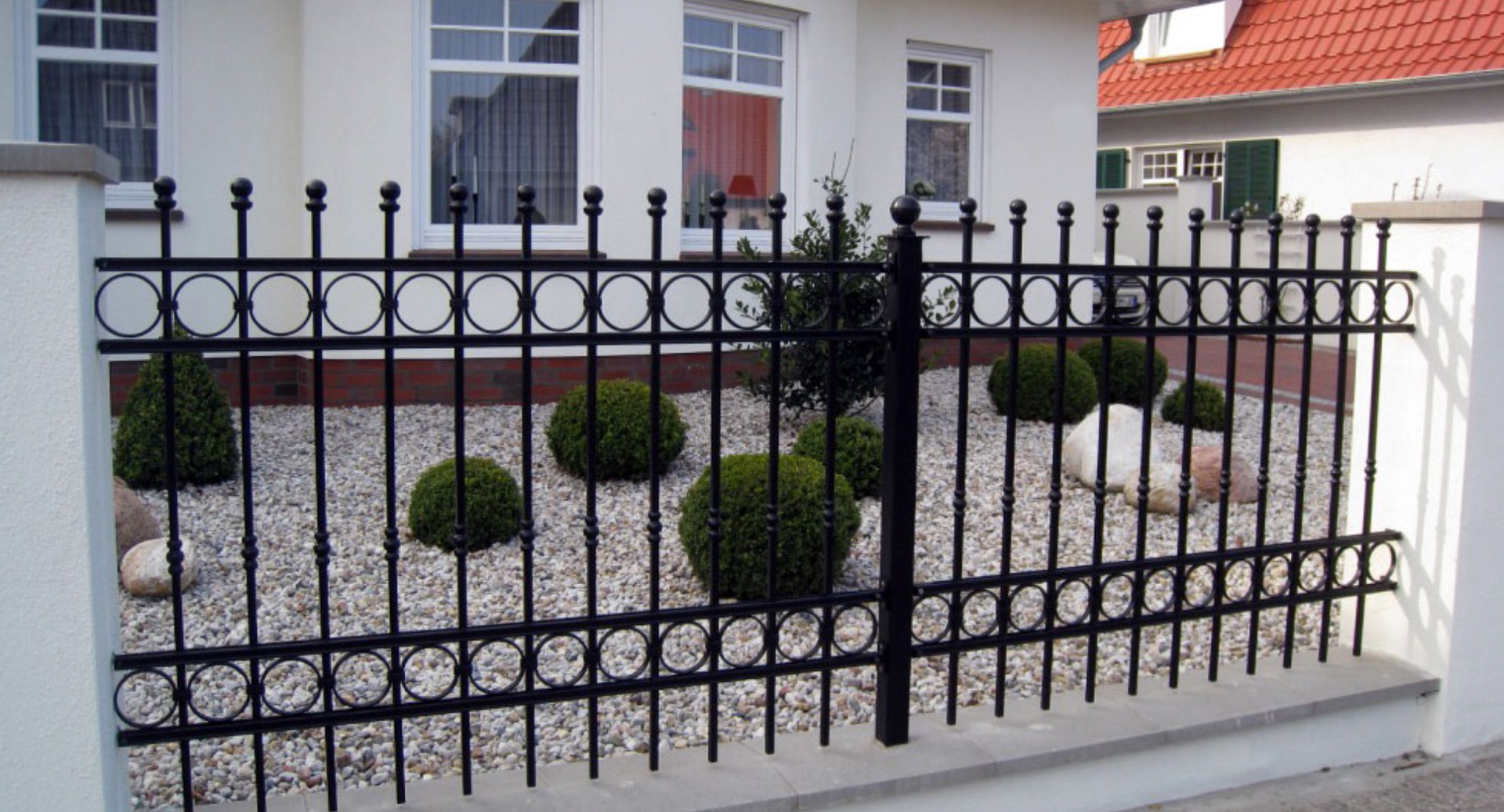
lso called ornamental steel, this material mimics the look of wrought iron but is formed from hollow steel tubes by machines and welded into panels.
Pros
- Affordable and widely available. Mild steel is less expensive to produce and ship than wrought iron.
- Variety of decorative options. Pickets, rings, rosettes, baskets, spear points and scrolls can be cast and welded into countless designs.
- Easier to repair and install. Damaged sections can often be replaced or rewelded without replacing the entire fence.
Cons
- Not hand‑forged. Panels are machine‑made, so they lack the custom craftsmanship of wrought iron.
- May dent or bend. Mild steel is more easily dented or bent than solid wrought iron and relies on coatings to prevent rust.
- 
Best for: Residential properties, decorative perimeter fencing and commercial sites seeking a traditional look at a lower cost.
Cast Iron
Cast iron became popular in the 18th and 19th centuries because it was inexpensive to produce in moulds. Its compressive strength made it ideal for columns and decorative railings, but it is brittle and unsuitable for long spans under tension. Modern fences rarely use cast iron, but historic buildings may still feature cast panels.
Steel and Aluminum
Steel offers superior strength and is used in high‑security fences around factories and commercial properties. It requires protective coatings—such as powder coating or galvanizing—to resist rust. A properly coated steel fence can last for decades.
- Aluminum is lightweight and naturally rust‑proof. It is popular for residential and pool fencing, especially in coastal or damp climates, because it resists corrosion even when the finish is scratched. Aluminum fences can last 50 years or more with minimal maintenance, but may bend or dent more easily than steel.
Sources: Tampasteel, EliteFence
Plain vs Ornamental: Production and Appearance
| Aspect | Plain Iron Fencing | Ornamental Iron Fencing |
|---|---|---|
| Production | Modern plain “wrought iron” fences are typically machine‑welded steel panels. There may be visible seams along pickets and rails. | Cast in foundries or formed by machines into decorative shapes, then welded into panels. |
| Appearance | Straight pickets with minimal decoration, often powder‑coated in black for a classic look. | Features decorative elements such as rings, scrolls, finials and spear points. Designs can replicate historic wrought iron or create contemporary patterns. |
| Cost & Availability | Lower material and labour cost; easier to produce in large quantities. | Higher cost for custom or highly ornate designs; prices increase with complexity and customization. |
| Common Uses | Perimeter fencing, property lines, pet and child containment. | Front-yard fences, entry gates, balconies, commercial facades and any setting where aesthetics are a priority. |
Installation Timeline and Typical Process
nstallation time depends on project scope, fence type and site conditions. For most standard residential projects, the on‑site installation typically takes 1 to 5 days, with chain‑link and aluminum fences on the shorter end and heavy or custom iron fences on the longer end. However, planning, permitting, surveys and material lead times can extend the total project window to one to three weeks. Factors such as property size, design complexity, soil conditions and weather can add days or weeks. A professionally installed wrought iron fence of 100–200 feet with custom ornamental sections may require 3–5 days or more to complete. Always confirm timelines with your installer, allowing extra time for permits and material delivery.
Iron Fencing Finish Options
Powder Coating
Powder coating is applied as a dry powder and baked onto the metal. It creates a thicker, denser and longer‑lasting finish than traditional wet paint. Before application, the fence undergoes multi‑stage pretreatment to remove contaminants and ensure a strong bond. Powder‑coated finishes resist scratching, peeling, and chipping and emit fewer volatile organic compounds (VOCs) than paint. The hard coating prevents moisture from reaching the metal, significantly reducing the risk of rust. Occasional power-washing keeps the finish looking new; avoid harsh chemicals that can degrade the coating.
Wet Paint
Traditional painting involves brushing or spraying liquid paint onto the metal. It can be touched up more easily than powder coating, but the finish is thinner and more prone to scratching and peeling. Wet paint also releases more VOCs during application and may need reapplication sooner, especially in harsh climates. Painted fences should be inspected annually for chips or rust spots and repainted as needed.
Galvanizing
Galvanizing coats steel with a layer of zinc, protecting it from rust. A galvanized wrought iron fence typically costs $60–$65 per linear foot for 4–6 ft heights. Galvanized steel requires minimal maintenance and may not need additional painting or sealing. Some homeowners choose to powder‑coat over galvanization for additional color and protection.
Costs vs Longevity: What Homeowners should know
Cost per Linear Foot
A wrought iron fence typically costs $50–$85 per linear foot installed. Plain black designs fall at the lower end ($50–$60), galvanized fences cost about $60–$65, and ornamental designs range from $65–$85. Custom ornamental fences can exceed $85–$130 per linear foot. Adding a gate increases material costs by $200–$650.
Total project cost.
For a typical 200‑linear‑foot wrought iron fence, expect to pay $10,000–$17,000, including materials and labor. Larger or more complex projects, such as high‑end custom fences with intricate scrollwork, will cost more.
Longevity and maintenance.
With regular maintenance—cleaning, repainting or powder coating, and promptly addressing rust—wrought iron fences can last 60–100 years. Steel fences can also last decades with proper coatings. Aluminum fences offer 50+ years of durability with very little maintenance. The long lifespan offsets the higher upfront cost compared with wood or vinyl fencing.
Final Thoughts
Iron and metal fences are part of a centuries‑old tradition. From ancient tools to the ornamental masterpieces of the Victorian era, these fences have evolved alongside advances in metallurgy and craftsmanship. Today, homeowners and businesses can choose from wrought iron, ornamental steel, aluminum and galvanized options to suit their budget and aesthetic goals. Understanding the historical context, material differences, installation process, finishing options and cost considerations will help you select a fence that provides security, beauty and value for decades to come. When in doubt, consult with a professional installer to evaluate your site conditions, climate and design preferences.