

Sacramento Homeowner's Guide to Wood Fence Materials and Stains
January 12, 2026
Not all wood fences perform the same in Sacramento’s heat, sun exposure, and dry seasons. The type of wood and stain you choose directly affects how long your fence lasts, how often it needs maintenance, and how it looks over time. This guide explains the most common wood fence materials used on Sacramento homes, the stains that work best locally, and how to choose the right combination for long-term performance.
Why Sacramento’s Climate Matters for Wood Fences
Sacramento experiences long, hot summers, intense UV exposure, and extended dry periods. These conditions can cause certain woods to dry out, warp, or crack faster if they are not properly selected and protected. Unlike coastal or humid climates, Sacramento fencing must prioritize UV resistance, moisture balance, and heat tolerance.
What This Means for Homeowners: Wood selection and staining are not cosmetic decisions—they are performance decisions that affect lifespan and maintenance costs.
Redwood Fencing for Sacramento Homes

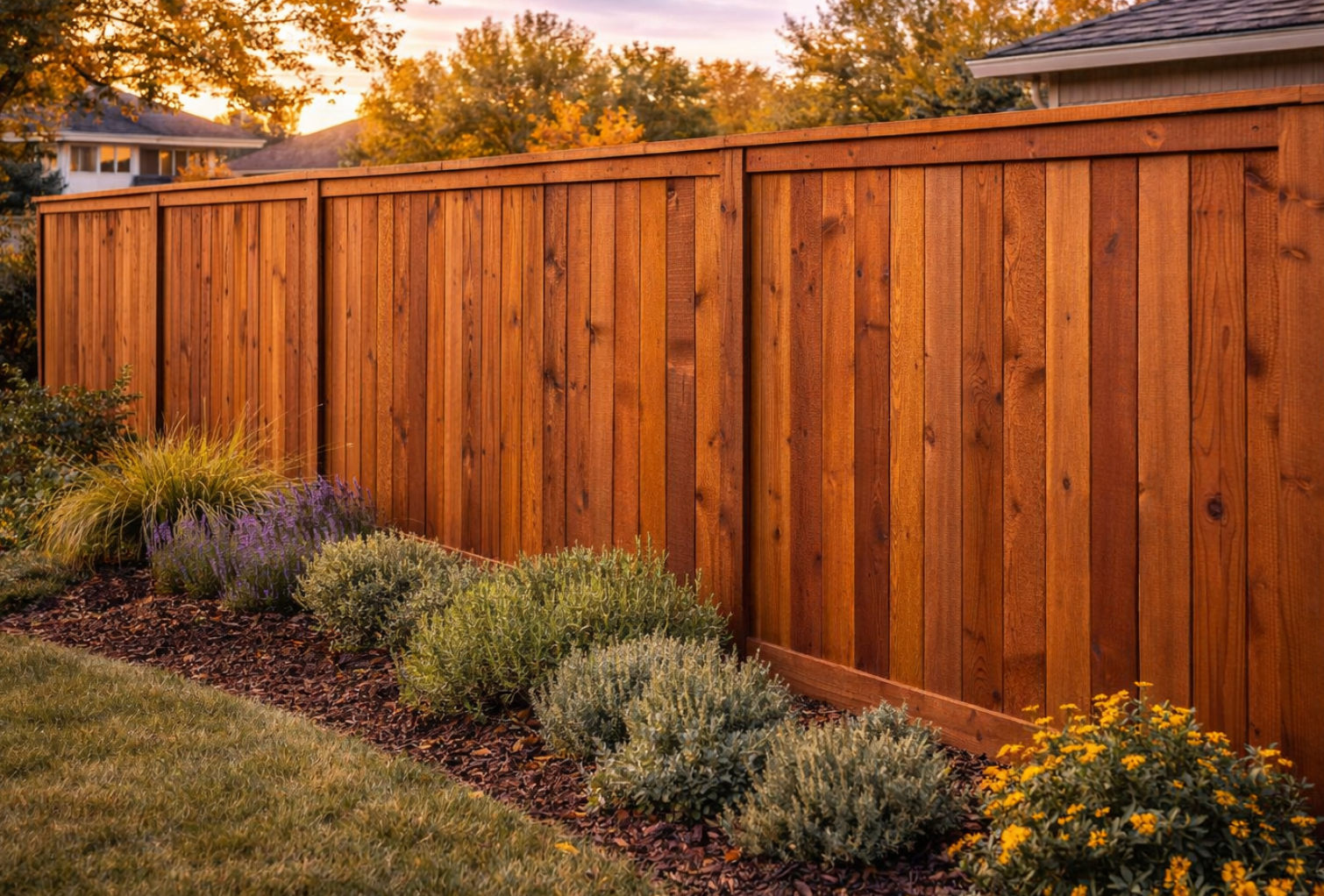
Redwood is one of the most popular fencing materials in Sacramento due to its natural resistance to insects and decay. It performs well in dry heat and offers a classic appearance that complements many local neighborhoods.
Pros
- Naturally rot and insect resistant
- Performs well in Sacramento heat
- Attractive grain and color
Cons
- Higher upfront cost
- Requires regular staining to maintain appearance

Best for: Privacy fences, backyard enclosures, decorative fencing
Cedar Fencing in Sacramento

Cedar is another common option and is often chosen as a slightly more affordable alternative to redwood. It is lighter in color and has natural oils that help resist decay.
Pros
- Naturally resistant to insects
- Lighter appearance
- Accepts stains evenly
Cons
- Slightly shorter lifespan than redwood
- Can dry out faster without proper sealing
Best for: Residential privacy fences, side yards, decorative fencing
Pressure-treated pine is widely used due to its affordability and availability. It is chemically treated to resist rot and pests, but it behaves differently in Sacramento’s dry climate.
Pros
- Lower upfront cost
- Readily available
- Strong structural performance
Cons
- Requires time to dry before staining
- More prone to warping and cracking
- Heavier maintenance over time
Best for: Residential privacy fences, side yards, decorative fencing
Douglas Fir and Other Softwoods

Douglas fir is sometimes used for custom fencing projects due to its strength and clean appearance, but it requires careful protection in Sacramento conditions.
Pros
- Strong and durable
- Clean, uniform look
Cons
- Not naturally rot-resistant
- Requires high-quality staining and sealing
Best for: Custom or architectural fencing with proper maintenance
Why Staining Is Essential for Sacramento Wood Fences
Staining is not optional in Sacramento’s climate—it is a protective requirement. Prolonged UV exposure, low summer humidity, and temperature swings accelerate surface degradation on unstained wood. According to the U.S. Forest Service, ultraviolet radiation is the primary cause of surface checking, discoloration, and fiber breakdown in exterior wood products, often appearing within 6–12 months if left unprotected. Sources: FS/USDA
Oil-Based Stains for Wood Fencing
Oil-based stains penetrate deeply into wood fibers, slowing moisture loss and providing stronger UV resistance than surface-level coatings. Independent testing by the Forest Products Laboratory shows penetrating oil finishes outperform film-forming finishes in dry, high-sun environments due to reduced peeling and checking.
Why Oil-based stains work well in Sacramento:
- Deeper penetration reduces drying and cracking
- Better UV resistance under full sun exposure
- Longer maintenance cycles (typically 2–3 years)
Water-Based Stains for Wood Fencing
Water-based stains dry faster and emit fewer VOCs, but they typically sit closer to the wood's surface. While suitable for mild or shaded environments, they generally require more frequent reapplication in Sacramento’s heat. The Paint Quality Institute notes that water-based exterior stains often need reapplication 30–50% sooner than oil-based stains in high-UV regions.
Sources: Pain Quality article
Best use cases in Sacramento:
- Shaded side yards
- Decorative fencing with limited sun exposure
- Homeowners prioritizing low odor and fast drying
Combination: Redwood + Oil-Based Semi-Transparent
This is one of the highest-performing combinations for Sacramento residential fencing. Redwood naturally resists decay and insects, while oil-based semi-transparent stains protect against UV damage without trapping moisture. According to the California Redwood Association, properly finished redwood fencing can last 20–30 years in dry climates when maintained on a 2–3 year stain cycle. Sources: Calredwood article
Why this combination works locally:
- Preserves natural grain while blocking UV rays
- Reduces surface checking during extreme heat
- Slower color fade compared to darker finishes
Cedar + Natural Oil Sealant
Cedar contains natural oils that resist insects and decay, but those oils dissipate faster in hot, dry environments. Natural oil sealants replenish moisture balance while enhancing cedar’s durability. The Western Red Cedar Lumber Association notes that untreated cedar exposed to direct sun will fade and dry rapidly without protective finishes. Sources: RealCedar article
Best for Sacramento homeowners who want:
- A lighter, natural appearance
- Even aging without peeling
- Predictable maintenance every 2 years
Cost vs Longevity: What Sacramento Homeowners should know
In the Greater Sacramento area, the true cost of a wood fence is not determined at installation—it is determined over time. While lower upfront pricing can be attractive, Sacramento’s climate tends to magnify the long-term cost differences between materials, finishes, and maintenance schedules. For Sacramento homeowners, the most cost-effective fence is rarely the cheapest one to install. It is the fence that withstands local heat, sun exposure, and seasonal changes with minimal intervention. Choosing durable lumber and proven stain systems reduces maintenance frequency, limits repair costs, and preserves the fence’s appearance and structural integrity for the long term.
Lumber Costs
Lumber pricing in the Sacramento region varies significantly by species and grade. Redwood consistently sits at the higher end of the market due to its durability and regional demand, while cedar typically falls slightly below redwood in price but still well above pressure-treated pine. Pressure-treated lumber is usually the least expensive option upfront, but it often requires more frequent repairs and earlier replacement when exposed to Sacramento’s heat and sun. Over a ten- to fifteen-year period, homeowners frequently spend more maintaining lower-cost wood than they would have spent installing higher-quality lumber from the start.
Stain and Sealant Costs
Stain and sealant costs also play a major role in long-term expense. In Sacramento, high-quality exterior oil-based stains and penetrating sealants typically cost more per gallon than water-based alternatives, but they last longer under intense UV exposure. Homeowners who choose lower-cost stains often find themselves reapplying every one to two years, while premium oil-based products commonly hold up for two to three years or more. Over time, the additional labor and material costs of frequent re-staining can exceed the initial savings of cheaper products.
Labor Costs
Labor is another major factor that impacts long-term cost. In the Greater Sacramento area, professional fence staining and maintenance labor generally reflects regional construction rates, which have increased steadily due to demand, licensing requirements, and material handling costs. Re-staining a fence every year or two means repeatedly paying for surface preparation, cleaning, and application. Homeowners who choose materials and finishes that extend maintenance cycles effectively reduce how often they need to pay for labor, not just materials.
Depreciation Costs
There is also a compounding effect to consider. Wood that dries out, cracks, or warps due to insufficient protection often requires board replacement rather than simple re-staining. Replacement lumber, removal of damaged boards, and reinstallation add costs that are rarely accounted for during the initial project budget. In Sacramento’s climate, fences that are left unstained or improperly sealed frequently begin showing surface damage within the first year, leading to accelerated wear and higher repair costs later.
Final Thoughts
Not all wood fences perform the same in Sacramento’s hot, dry climate. The type of lumber and stain you choose directly affects how long your fence lasts, how often it needs maintenance, and how well it holds up under intense sun exposure. This guide breaks down the most common wood fence materials used on Sacramento homes, explains which stains and sealants perform best locally, and outlines the real-world cost and longevity tradeoffs homeowners should understand before building or refinishing a wood fence.